The client
Pekoe Trail Trekking is a community-based guided-trek operator in Sri Lanka, licensed by the Sri Lanka Tourism Development Authority (SLTDA). The company leads curated treks along the Pekoe Trail · a 22-stage long-distance hiking route through the Central Highlands, from Kandy to Ella via Nuwara Eliya, Horton Plains, Haputale and Ella. The trail threads tea estates, cloud forests, waterfalls, and working villages.
The team is led by Deen, with over 30 years of trekking experience. Most customers arrive via travel-forum recommendations, TripAdvisor, and word-of-mouth from past trekkers. The existing web presence couldn't convert them · no structured trip catalog, no clear booking path, no social proof shown at the moment of decision.
Why custom WordPress with ACF
Twenty-two trail stages, each with its own elevation profile, day-by-day itinerary, photography, and seasonal notes. Plus multi-day trek packages layered on top (3-day, 4-day, 10-day). That's a content-heavy, structured catalog that needs to be editable by a non-technical team without turning the admin into a WYSIWYG disaster.
Custom WordPress theme + Advanced Custom Fields (ACF) was the right tool:
- ACF Flexible Content for stages · each stage entry has typed fields for name, elevation, distance, difficulty, season, photography, stage-by-stage notes. The team adds or edits stages in a predictable form, not a page-builder canvas.
- Custom post types for trek packages, guide profiles, and trekker testimonials · each with its own schema and admin UI.
- No page builder (no Elementor, no Divi, no WPBakery). Every page layout is hand-coded in the theme. Keeps the HTML clean, the Core Web Vitals decent, and the admin focused on content rather than design surgery.
- No multi-purpose Envato theme. The theme is built for this site only · 2,000 lines of PHP/HTML instead of 50,000 lines of unused "business" / "restaurant" / "portfolio" templates.
The trade-off of custom WP vs a headless architecture: slightly less blazing performance, but a significantly faster editorial workflow for the team and a smaller maintenance surface. The right choice for a 5-person trekking company, not a media publisher.
What we built
A marketing site structured around the enquiry, not the brochure. Every page ends in a booking form that takes dates, group size, and trip preferences, and commits to a personalised itinerary reply within 24 hours.
Core features:
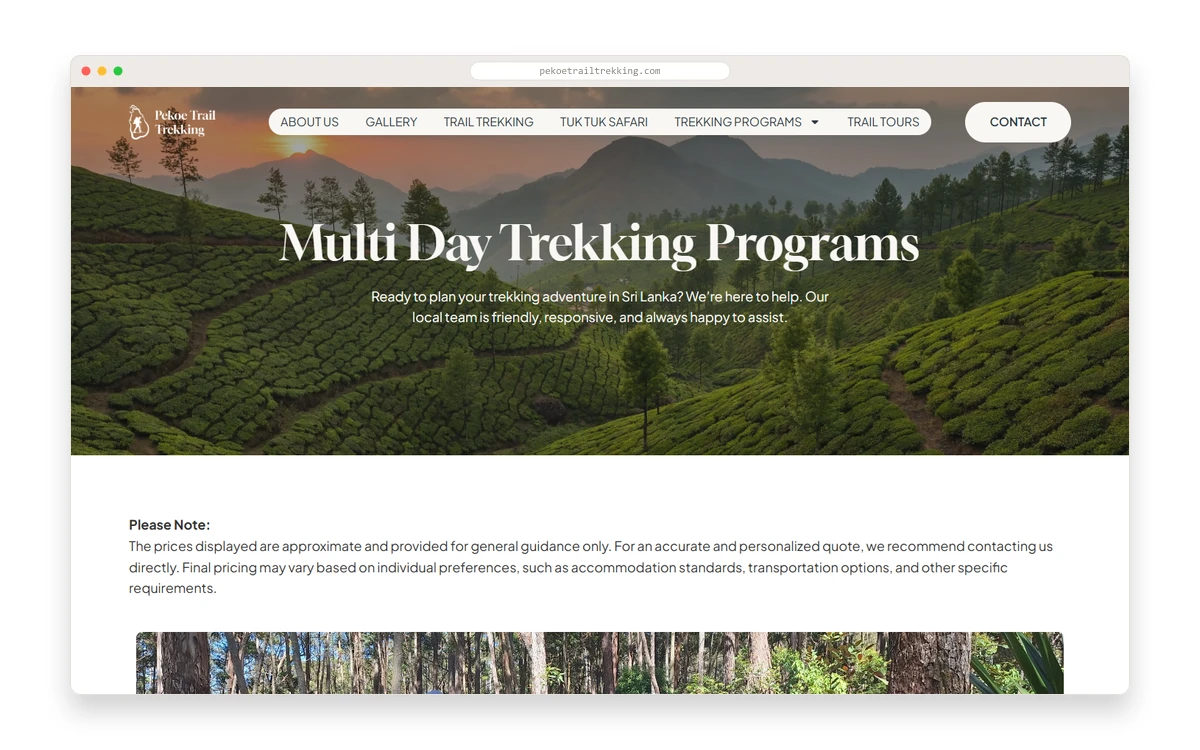
- 22-stage catalog rendered from ACF data · each route has its own page with elevation profile, stage-by-stage notes, photography gallery, and what the weather is typically doing that month. Adding a 23rd stage is a form fill, not a developer ticket.
- Trek-package CPT with multi-day packages grouped by duration · day treks, 3-day combinations, the full 10-day Kandy-to-Ella pilgrimage. Each package links to its constituent stages automatically.
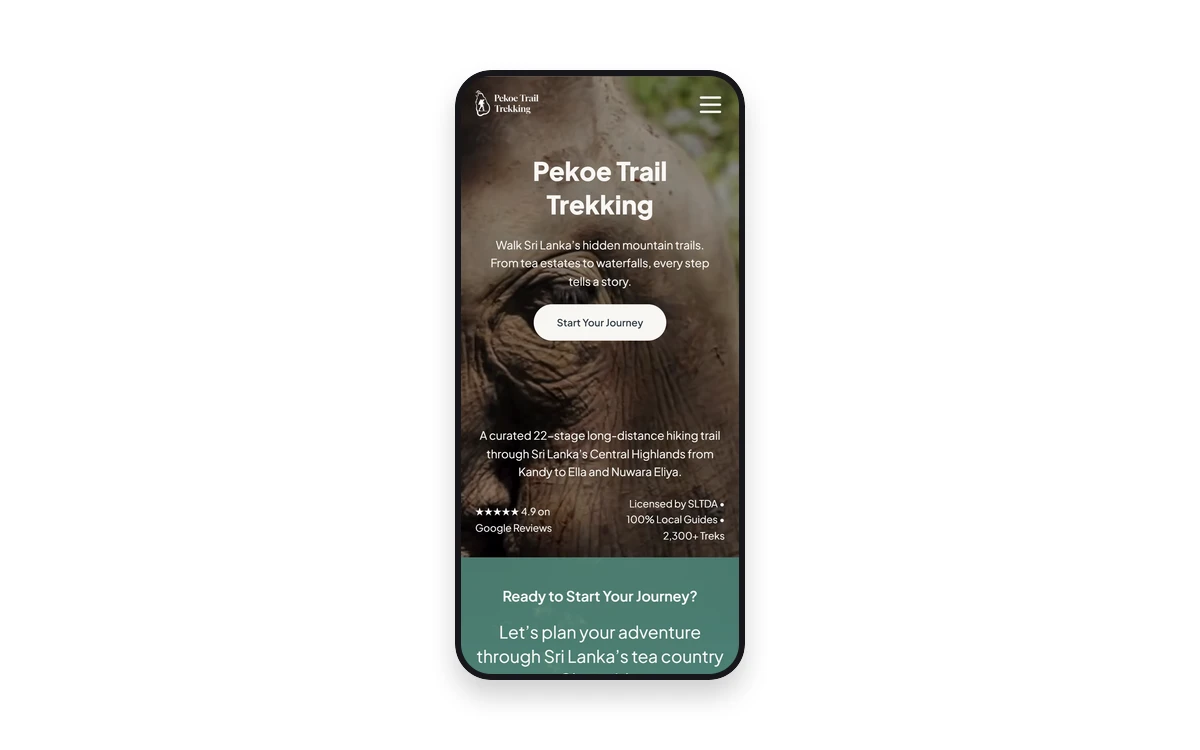
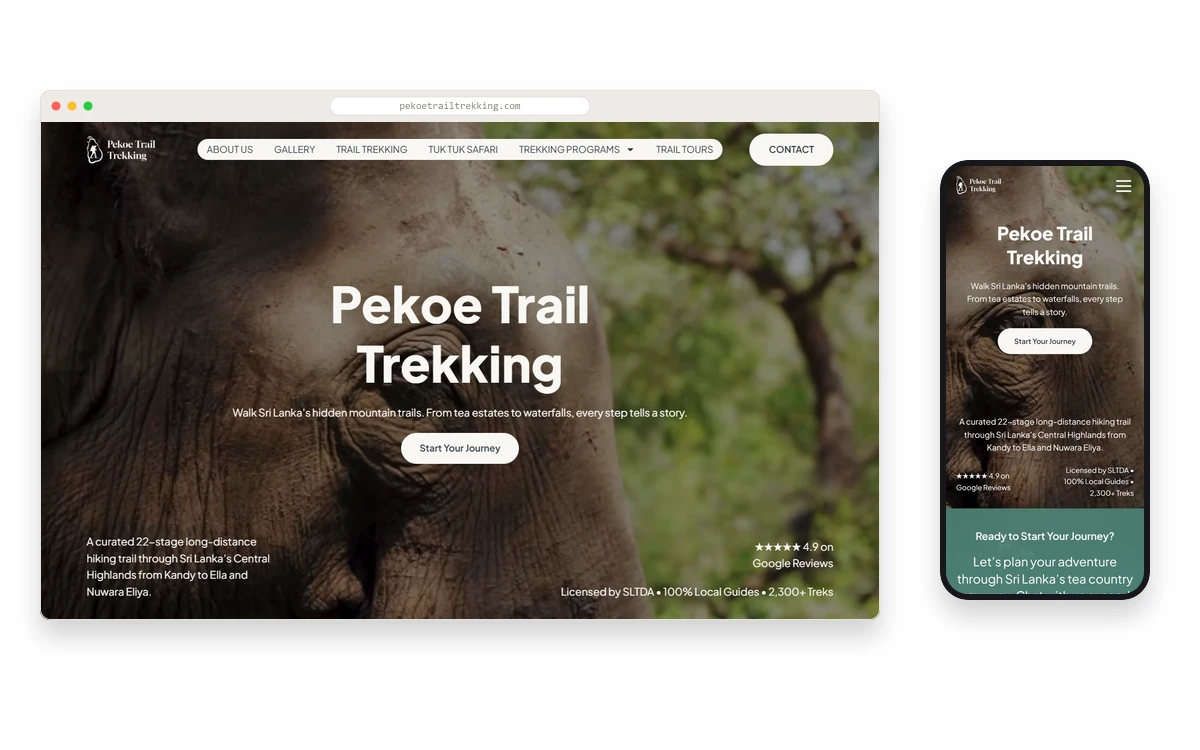
- Social proof rendered at decision points · trekker testimonials next to the CTA (not in a separate "testimonials page" nobody visits), SLTDA license + 2,300+ completed treks as trust chips above the fold, guide-team photography throughout.
- Booking enquiry form as the primary conversion · short, mobile-friendly, collecting only what's needed to draft an itinerary. Submissions route to the team inbox for a human reply within 24 hours · no auto-responder pretending to be Deen.
- SEO for long-tail trek queries · each stage's page targets specific search like "Pekoe Trail stage 12 Devil's Staircase" or "Horton Plains to Haputale trek". LocalBusiness schema tied to Sri Lanka so the site ranks in the tourism cluster.
- Responsive design optimised for overseas visitors on mobile · tourists research on the beach in Mirissa or in the hotel lobby in Kandy. The theme is lean enough to load fast on weak 4G.
What we kept out
Honest scope · we built the website, not the booking operation. We didn't design the trek routes (SLTDA-licensed guides do), we didn't handle customer support (the team does), and we didn't build a full payment-capture platform (enquiries go to a human who sends a proposal separately). Building for the "human reply" model was a deliberate choice · fully automated bookings would undermine the "community-based, 30 years of experience" positioning that makes this company work.